Getting started with exercise can feel like an uphill battle, right? You know it's crucial for both your body and mind, but the sheer thought of picking the "right" workouts or executing them perfectly often stops us before we even begin. It's easy to get lost in the sea of conflicting advice on online forums or social media, leaving you more confused than motivated. That's why we decided to cut through the noise. We’ve gone straight to the top fitness professionals, distilling their wisdom into a clear, actionable guide featuring the best foundational exercises for anyone new to working out. The best part? Many of these movements are incredibly accessible, requiring minimal gear and perfectly suited for your home environment.
Essential Insights Before You Begin
One of the biggest blunders I’ve observed when people kick off a new fitness journey is doing too much, too fast. Aaron Guyett, who directs education at Living.Fit, a prominent fitness program and equipment hub, strongly advises a gentler approach. He suggests starting slower, using lighter weights, and doing less than you initially think you need to. Why? Because overdoing it from the get-go often leads to burnout, which, honestly, is why so many people throw in the towel when things get tough.
"Think about being able to perform exercises each day and the exponential growth and performance that comes from consistency over intensity," Guyett explains. The key takeaway here is that consistent effort, even if it's moderate, builds far more long-term progress than sporadic, intense sessions. From what I’ve found, gradually increasing your intensity each week until you hit that sweet spot is a much more sustainable strategy.
You also need to be brutally honest with yourself about how much time you can realistically commit. Someone with just two or three days free for workouts might thrive on a full-body routine. On the flip side, if you've got three to five days available, you could explore upper and lower body splits, which allow for more focused training.
Most importantly, Guyett stresses the need to find activities you genuinely enjoy. What surprises most people is that exercise doesn't have to be a chore! When you actually like what you're doing, you'll naturally want to keep coming back. He recommends starting with full-body workouts to build a solid base, then potentially moving towards more specialized upper and lower body divisions as you gain confidence.
A great rule of thumb, industry experts suggest, is that any well-rounded exercise plan should incorporate some variation of a squat, hinge, push, pull, and carry throughout your week. Here's why this matters: these aren't just gym exercises; they mimic fundamental movements you perform every single day, like picking up groceries, sitting down, or reaching for something overhead. Maintaining and improving these strengths makes daily life easier and safer. Don't worry if those terms sound a bit foreign right now – we'll break down exactly what they mean with our recommended exercises below. As you master the basics, you'll naturally progress to more advanced versions.
Another vital point to remember is the power of rest. Your body doesn't get stronger during your workout; it recovers and adapts after it. So, make sure to schedule a rest day or two to allow for proper recovery. It’s about being consistent and smart, not about pushing yourself beyond your limits every single session.
And, of course, if you have any doubts about your current health status or ability to perform these activities, please consult your doctor before diving into a new workout regimen. It's always better to be safe than sorry!
Do You Need Any Equipment?
Yes, you'll definitely want to invest in some dumbbells for these exercises, as they form the backbone of a strength training routine. As a beginner, it's crucial to start with a range of light to moderate weights that allow you to maintain excellent form for 10 to 15 repetitions. Once you complete that many reps, you've finished one "set." Aim for two to three sets of each exercise, taking a minute to three minutes of rest between them.
The specific weight you'll use isn't a one-size-fits-all answer; it depends heavily on the exercise and your individual fitness level. Guyett advises starting with two dumbbells you can comfortably press overhead, another pair you can squat with, and a final set you can easily carry. Generally speaking, he suggests kicking things off with very light 5-pound and 10-pound dumbbells. But here's the thing: you're going to improve surprisingly quickly! For women, he recommends building a collection that includes 5-, 10-, 15-, 20-, and 25-pound dumbbells. Men, on the other hand, should aim for sets of 10-, 15-, 20-, 25-, 30-, 35-, and 40-pound dumbbells.
Be honest with yourself about the weight you select. If it's too light, you won't challenge your muscles enough to reap the full benefits. If it's too heavy, you significantly increase your risk of injury. Once you feel confident that you've mastered an exercise with perfect form using your starting weight, you can gradually bump it up by 5 to 10 percent every four to six weeks. For instance, if a 25-pound dumbbell squat feels effortless, your next target might be 30 or 35 pounds. One excellent way to hold yourself accountable and track your progress is by keeping a dedicated workout journal where you log the weights used for each exercise.
Top Beginner Exercises
Now that we've covered the crucial philosophy of "less is more" when starting a new program, let's dive into the specific exercises that will build a strong foundation for your fitness journey.
Squats
Squats are a powerhouse movement, and there are many ways to approach them. Guyett highly recommends the dumbbell front squat for beginners. To perform it, hold light-to-medium dumbbells on your shoulders, keeping your elbows pointed forward and in line with your chest. Stand with your feet about shoulder-width apart. Begin by pushing your hips back as you bend your knees, lowering yourself until your thighs are at least parallel to the floor (meaning your knees form roughly a 90-degree angle). It's vital not to go too far past this parallel position, as this can cause your lower back to arch, potentially leading to discomfort or pain.
What I've found is that mastering proper form is paramount with this exercise, even more so than lifting heavy. It demands good mobility in your wrists to support the dumbbells, and flexibility in your shoulders and ankles to maintain an upright posture throughout the descent.
If you're looking for a bit of extra support or a reference point as you learn, try placing a sturdy bench or box behind you. As you lower into the squat, control your movement until your glutes lightly tap the box or bench, then drive back up to a standing position.
Glute Bridge
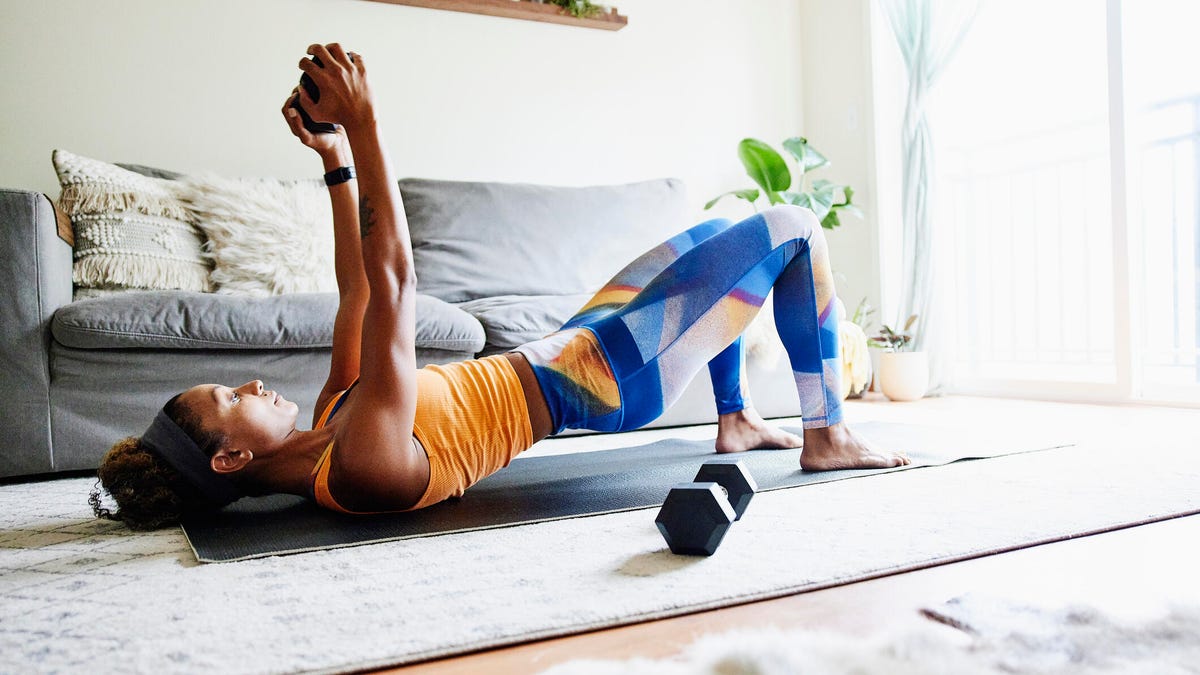
If you're eager to target your glutes but aren't quite comfortable with squats yet, the glute bridge is a fantastic alternative. Jake Dickson, a certified personal trainer and contributing editor at BarBend, notes, "The glute bridge is a great technique for novices because it stimulates your glute muscles, which are the large muscles in your backside."
To execute the glute bridge, lie on your back with your knees bent and your feet flat on the ground, hip-width apart. Engage your glutes and lift your hips off the floor until your body forms a straight line from your knees to your shoulders. Pause briefly at the top, giving those glutes an extra squeeze, then slowly lower back to your starting position. To ramp up the challenge as you get stronger, you can place a dumbbell or even a barbell across your hips (just be sure to use a mat or towel for cushioning!).
Push-ups
Push-ups are incredibly versatile – you can do them almost anywhere, no equipment needed! Plus, there are numerous variations to adjust the difficulty, making them suitable for any fitness level. For absolute beginners, starting with push-ups against a wall is an excellent way to build foundational strength.
As you get stronger, you can progress by performing them with your hands elevated on an incline, like a sturdy table or bench. Gradually decrease the height of the incline to make the exercise more challenging. Once you can comfortably perform push-ups from the ground, you can experiment with different hand positions or vary the tempo to further increase the intensity.
Deadlifts
Deadlifts are considered one of the most functional exercises you can do, closely mirroring real-life movements like lifting heavy grocery bags or moving furniture. They can be performed with dumbbells, barbells, or kettlebells, offering plenty of room for progression.
For beginners, starting with a pair of dumbbells is ideal. This exercise is fantastic for teaching you how to hinge properly from your hips, and it effectively targets your core, back, glutes, and hamstrings.
To perform a dumbbell deadlift, stand with your feet shoulder-width apart, maintaining a soft bend in your knees, and hold the dumbbells in front of your thighs. Keep your shoulders pulled back (avoid rounding your back at all costs!) as you initiate the movement by bending at your hips and pushing your hips backward. Slowly lower your torso, keeping the dumbbells close to your shins, until your body is roughly parallel to the floor. You should feel a distinct stretch in your hamstrings at the bottom. Then, slowly reverse the movement, returning to the starting position while maintaining that strict form. As your form improves, you can increase the dumbbell weight or eventually progress to barbells and kettlebells.
Dumbbell Rows
Pulling exercises, like dumbbell rows, are crucial for strengthening the muscles in your back and can even significantly improve your posture. For this exercise, you'll need a weight bench and a pair of dumbbells. If you don't have a dedicated weight bench at home, don't sweat it – most gyms have them, or you can use any sturdy bench or elevated surface you have available.
Since you'll be working one arm at a time, you'll complete all your reps on one side before switching.
To start, position your left knee and left hand on the bench. Your hand should be directly in front of your shoulder, supporting your body weight. Ensure your back is flat and parallel to the floor. With your right hand, hold a dumbbell, letting it hang extended toward the floor. To perform the row, roll your shoulders back slightly, then pull the dumbbell in towards your hip, drawing your elbow back. Control the weight as you lower it back to the starting position. As you become more proficient with the dumbbell row, you'll be able to progress to other variations like the barbell or kettlebell row.
Farmer's Carry
This exercise, which can be done with either dumbbells or kettlebells, is a fantastic way to challenge your upper body, shoulder, and core stability, while also significantly strengthening your grip. The whole point of the farmer's carry is to build the practical strength needed to confidently haul heavy objects. Think about finally being able to carry all your heavy groceries in one trip instead of making multiple treks to the car!
In my experience, I personally love using kettlebells for this one, but trust me, you'll get the same incredible benefits using dumbbells.
To perform a farmer's carry, simply grab a heavy dumbbell in each hand – choose a weight that feels challenging for your grip but still allows you to walk with good form. Pull your shoulders back and down, brace your core tightly, and stand tall with an upright back. Then, simply walk across the room for a set time or distance. Focus intently on maintaining perfect form throughout the exercise, and don't hesitate to take short breaks if your grip or posture starts to falter.
Cardio
While strength training builds muscle and power, cardio has its own unique and vital health benefits. Balancing it out with the other strength exercises on this list will unlock an even broader spectrum of fitness advantages. Cardio simply means anything that elevates your heart rate. This could be a brisk walk, a bike ride, hiking, swimming, running, or even taking a dance class – the options are endless! Guyett typically recommends that beginners aim for strength training one to three days a week, complemented by some form of cardio one to three times a week. Engaging in regular cardio isn't just great for boosting your endurance; it's also a powerful way to keep your heart healthy and strong.
Starting your fitness journey doesn't have to be intimidating. By focusing on foundational movements, listening to your body, and prioritizing consistency over intensity, you're setting yourself up for lasting success. Remember, a balanced approach combining strength training with cardio, along with adequate rest, is your blueprint for a healthier, stronger you. Just take that first step – you've got this!
Comments
Post a Comment