Embarking on a fitness journey can feel incredibly daunting, right? You know exercise is vital for both your body and mind, but getting started and, more importantly, sticking with it often feels like climbing a mountain. The sheer volume of information, often conflicting, makes many beginners worry they're choosing the wrong workouts or executing them improperly. Honestly, I think that's why so many people get stuck before they even begin. While forums like Reddit offer a wealth of personal anecdotes, sifting through it all for reliable, beginner-friendly advice is a huge challenge. That’s precisely why we went straight to the pros. We've distilled insights from experienced fitness experts to bring you a curated list of top exercises perfect for anyone new to working out. The best part? Many of these can be done right at home with minimal gear.
What to Know Before You Start
One of the biggest blunders I've observed newcomers make is diving in headfirst, doing far too much too soon. Aaron Guyett, who directs education for Living.Fit, a prominent fitness program and equipment hub, emphasizes a crucial point: "Start slower, lighter, and do less than you think." Why does this matter? Pushing too hard, too fast, often leads directly to burnout. And when things feel too difficult, what happens? People quit. It's a classic trap, isn't it?
Guyett explains, "Think about being able to perform exercises each day and the exponential growth and performance that comes from consistency over intensity." The key takeaway here is simple: consistency trumps intensity every single time. Gradually increase your intensity week by week until you discover what feels right for your body.
You also need to be realistic about your schedule. How many days can you genuinely commit to exercise each week? Someone with just two or three days might thrive on full-body workouts. On the flip side, if you have three to five days available, you could explore an upper and lower body split. It really depends on your life.
Most importantly, Guyett stresses that you've got to find workouts you genuinely enjoy. If it feels like a chore, you won't stick with it. He recommends kicking things off with full-body routines, then, as you get more comfortable, progressing to a split that targets your upper and lower body separately.
Generally speaking, any effective workout plan will incorporate movements that fall into these categories: a squat, a hinge, a push, a pull, and a carry. Here's why this matters: these aren't just gym exercises; they mimic essential everyday functions. We're talking about picking things up off the floor, sitting down and standing back up, or even carrying groceries. Maintaining and improving these fundamental strengths is absolutely vital for long-term health and independence. Don't worry if those terms sound unfamiliar; we'll break down specific exercises for each below. As you gain confidence with these foundational movements, you'll naturally be ready for more advanced variations.
Another critical element to remember is recovery. Your body needs rest days to heal and adapt. Trust me on this. It's about being consistent and smart, not about pushing past your limits every single day.
If you're unsure about your current health status or if these activities are right for you, please, always consult your doctor before beginning any new exercise program.
Do You Need Any Equipment?
For the strength training regimen we're discussing, you'll definitely need dumbbells. As a beginner, what I've found is that it's best to start with a range of light to moderate weights. Choose weights you can lift comfortably with good form for 10 to 15 repetitions. Once you complete one round of these reps, that counts as a "set." Aim for two to three sets of each exercise, taking a minute to three minutes of rest between them.
The ideal weight will vary based on the specific exercise and your current fitness level. Guyett suggests starting with two dumbbells you can easily press overhead, another pair you can squat with, and finally, two you can carry. He typically advises beginners to start very light, perhaps with 5-pound and 10-pound dumbbells. What surprises most people is how quickly you'll improve once you start working out consistently! For women, he recommends having sets of 5, 10, 15, 20, and 25-pound dumbbells. Men, on the other hand, might need sets ranging from 10, 15, 20, 25, 30, 35, to 40-pound dumbbells.
Be honest with yourself about the weight you choose. If it's too light, you won't fully reap the benefits of the exercise. If it's too heavy, you risk injury. Once you've truly mastered an exercise with excellent form using your starting weight, you can gradually increase it by 5 to 10 percent every four to six weeks. For example, if you're easily squatting a 25-pound dumbbell, your next target might be 30 to 35 pounds. A fantastic way to stay accountable and track your progress? Keep a workout journal where you log the weights you use for each exercise. It really helps you see how far you've come!
Best Beginner Exercises
Now that we've covered the "less is more" philosophy for starting a new workout program, let's dive into the specific exercises that will build a solid foundation for your fitness journey.
Squats
The squat is a foundational movement, and there are many variations to help you get comfortable with it. Industry experts often recommend the dumbbell front squat for beginners. To perform it, hold light- to medium-weight dumbbells on your shoulders, elbows pointing forward, aligned with your chest. Stand with your feet shoulder-width apart. Push your hips back as you bend your knees, descending into at least a parallel squat position (where your knees form a 90-degree angle). Going too far past parallel can cause your lower back to arch, which, in my experience, is a common culprit for back pain.
Honestly, getting the form right is more important than going deep initially. This exercise demands good mobility in your wrists (to hold the dumbbells), shoulders, and ankles to help you stay upright during the descent.
If you need a little extra reassurance, you can place a bench or box behind you. As you lower into the squat, control your movement until your glutes lightly touch the surface, then drive back up to standing.
Glute Bridge
Looking to really engage your glutes but not quite ready for squats? The glute bridge is an excellent alternative. Jake Dickson, a certified personal trainer and editor at BarBend, explains, "The glute bridge is a great technique for novices because it stimulates your glute muscles, which are the large muscles in your backside."
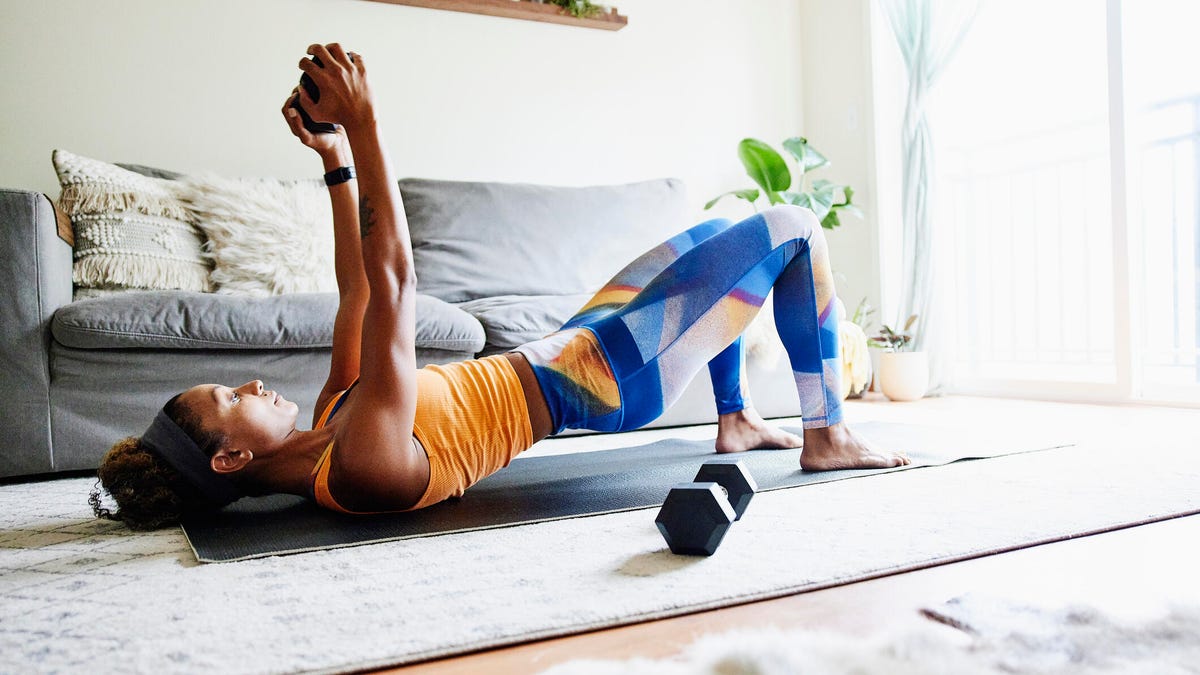
To do this, lie on your back with your knees bent and feet flat on the ground. Engage your glutes and lift your hips until your body forms a straight line from your knees to your shoulders. Pause briefly, squeezing those glutes even more, then slowly return to the starting position. To make it tougher, once you've mastered the movement, you can place a dumbbell or barbell across your hips (use a mat for cushioning, please!).
Push-ups
The beauty of push-ups? You can do them absolutely anywhere, no equipment needed! Plus, there are tons of variations to adjust the difficulty. For absolute beginners, a wall push-up is a perfect starting point.
As you get stronger, you can progress to incline push-ups, placing your hands on an elevated surface. Gradually decrease the height of that incline to make it more challenging. Once you can comfortably do push-ups from the ground, you can play with hand positioning or alter the tempo to increase the difficulty further.
Deadlifts
Deadlifts are considered one of the most functional exercises, closely mimicking movements we perform daily – like carrying heavy grocery bags and setting them down. There are several variations, using dumbbells, barbells, or kettlebells.
For beginners, starting with a pair of dumbbells is ideal. This exercise helps you learn how to hinge properly from your hips, and it powerfully targets your core, back, glutes, and hamstrings.
To perform a dumbbell deadlift, stand with your feet shoulder-width apart, a soft bend in your knees, holding the dumbbells in front of you. Keep your shoulders pulled back (avoid rounding your back!) as you hinge at your hips, pushing them backward. Slowly lower your torso, keeping the dumbbells close to your shins. Stop when your torso is roughly parallel to the floor. You should feel a distinct stretch in your hamstrings at the bottom. Then, slowly return to the starting position, maintaining that good form. As your form improves, you can increase the dumbbell weight or eventually move on to barbells and kettlebells.
Dumbbell Rows
Pulling exercises, like the dumbbell row, are fantastic for targeting your back muscles and can even significantly improve your posture. You'll need a weight bench and a pair of dumbbells for this one. No bench at home? Most gyms have them, or you can use any sturdy bench you might have around the house.
Since this is a unilateral exercise, you'll work one arm at a time.
To start, place your left knee on the bench, along with your left hand directly in front, aligned with your shoulder, supporting your body weight. Your back should be flat. With your right hand, hold a dumbbell extended toward the floor. To execute the row, brace your core, pull your shoulders back, and draw the dumbbell up towards your hip, squeezing your shoulder blade. Control the dumbbell as you lower it back down.
As you become more proficient with the dumbbell row, you'll be able to progress to other variations like the barbell or kettlebell row.
Farmer's Carry
This exercise, which you can do with dumbbells or kettlebells, is a powerhouse for your upper body, shoulder, and core stabilization. It also significantly strengthens your grip. The entire point of the farmer's carry is to build the practical ability to carry heavy objects with ease. Think about it: carrying all your groceries in one trip instead of three? Yes, please!
I personally find kettlebells fantastic for this, but dumbbells work just as well.
To perform a farmer's carry, grab a heavy dumbbell in each hand – something challenging for your grip, but still manageable. Pull your shoulders back, brace your core, and stand tall with an upright back. Then, simply walk across the room for a set distance or time. Focus intensely on maintaining impeccable form throughout the exercise, and don't hesitate to take breaks if you need them.
Cardio
Cardio brings its own unique set of health benefits, and balancing it with strength training (including the exercises listed above) will truly maximize your overall fitness gains. Cardio simply means anything that elevates your heart rate. This could be walking, cycling, hiking, swimming, running, or even joining a dance class! Guyett typically advises novices to aim for strength training one to three days a week, complemented by one to three sessions of cardio. Consistent cardio is a superb way to boost your endurance and keep your heart healthy – and that's incredibly important.
Bringing it all together, remember that starting a fitness journey isn't about perfection; it's about progress and consistency. Begin slowly, focus on mastering proper form, and choose activities you genuinely enjoy. By incorporating these foundational exercises and listening to your body, you're not just building muscles – you're building a sustainable, healthier lifestyle. Your future self will thank you for starting today.
Comments
Post a Comment